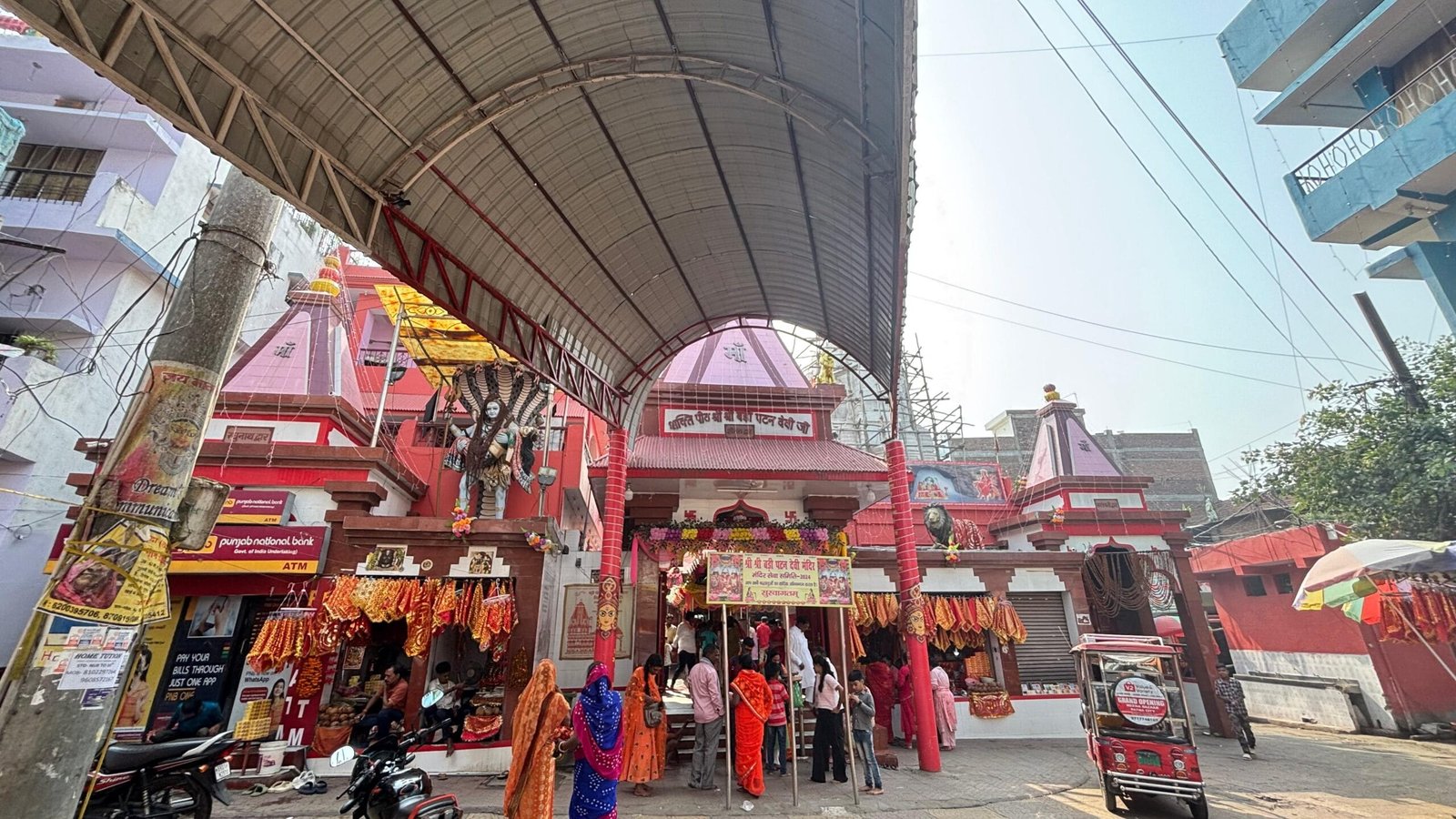
Patna, the capital city of Bihar, is home to many cultural and spiritual landmarks. Among these, the revered Badi Patan Devi Temple holds a special place in the hearts of devotees and stands as a significant marker of Bihar’s rich heritage. Known as one of the Shakti Peethas, Badi Patan Devi is a must-visit site for those interested in spiritual exploration, history, and the profound essence of Bihar’s cultural fabric.
Historical Background
The Badi Patan Devi Temple, dedicated to Goddess Durga, has a history that dates back centuries. According to legend, this temple is one of the 51 Shakti Peethas established across the Indian subcontinent, each a site where parts of the Goddess Sati’s body are believed to have fallen. Badi Patan Devi is said to mark the place where her “right thigh” fell, thus sanctifying the ground and making it a site of great reverence.
The temple also has a connection to Patliputra, the ancient city of Patna, which was a major center during the Mauryan and Gupta dynasties. The significance of Patliputra in the history of India is unparalleled, and Badi Patan Devi stands as a reminder of the city’s continuity as a hub of spirituality and culture.
Architectural Significance
Badi Patan Devi’s architecture mirrors the age-old temple styles of Bihar, with intricate carvings, classic motifs, and structures reflecting Vedic influences. The temple complex has a calm yet imposing presence, surrounded by a tranquil atmosphere that attracts not only devotees but also history and architecture enthusiasts. The main sanctum houses idols of Goddess Kali, Goddess Lakshmi, and Goddess Saraswati, symbolizing strength, wealth, and wisdom, respectively. The idols are carved in black stone and stand as testaments to the artistry and devotion of the past.
Cultural and Spiritual Significance
As a Shakti Peetha, Badi Patan Devi holds a deeply rooted significance in the spiritual lives of Bihari devotees and attracts visitors from all over India. The temple becomes particularly vibrant during festivals such as Navratri and Durga Puja when thousands gather to participate in rituals, bhajans, and offerings to the Goddess. Navratri, a nine-day celebration, is especially notable as devotees from Patna and neighboring regions come to pay their respects and seek blessings. The fervor and enthusiasm during these festivals create an electric atmosphere, embodying Bihar’s spiritual zeal.
Local Beliefs and Legends
The temple is not only a place of worship but also a center of local legends and tales. One such belief is that the city of Patna derives its name from this very temple. “Patan” in the name Patan Devi is believed to be an origin point for the name Patna. Locals regard Badi Patan Devi as the protector of Patna and its people, and several myths speak of the Goddess’s protective powers over the centuries. It is common to hear stories of devotees whose prayers were answered or miracles they experienced, adding to the allure and reverence of the temple.
The Temple Today: A Blend of Heritage and Modern Devotion
Badi Patan Devi has successfully preserved its historic charm, even as modern-day Patna has transformed into a bustling urban center. The temple authorities have made efforts to maintain its sacred atmosphere and architectural integrity. At the same time, amenities and facilities have been upgraded for the convenience of pilgrims. Regular pujas, aarti ceremonies, and community events are held, keeping the spiritual flame alive in an era where ancient traditions often fade. Despite these advancements, the temple remains true to its original character, providing a glimpse into Patna’s deep-rooted spirituality.
Visiting Badi Patan Devi
Located in Patna City, around 10 kilometers from the city center, Badi Patan Devi is easily accessible by road. The nearest airport is the Jay Prakash Narayan International Airport, and Patna Junction railway station serves as a convenient arrival point. The temple is open to visitors every day, but early mornings and evenings are the best times for a visit, allowing devotees to witness the aarti and soak in the peaceful ambiance of the temple.
For tourists, Badi Patan Devi offers more than just a visit—it is an experience that connects them to the spiritual legacy of Bihar. For locals, it is a place that carries their history, beliefs, and identity.
Conclusion
The Badi Patan Devi Temple stands as a pillar of Patna’s historical, cultural, and spiritual identity. Its ancient architecture, deep-rooted legends, and active role in the community highlight its importance as a Shakti Peetha. For anyone interested in exploring Bihar’s spiritual heritage, the Badi Patan Devi Temple is an essential stop. Whether one seeks blessings or a glimpse into the past, the temple is a testament to the enduring power of faith, devotion, and Bihar’s timeless cultural heritage.